
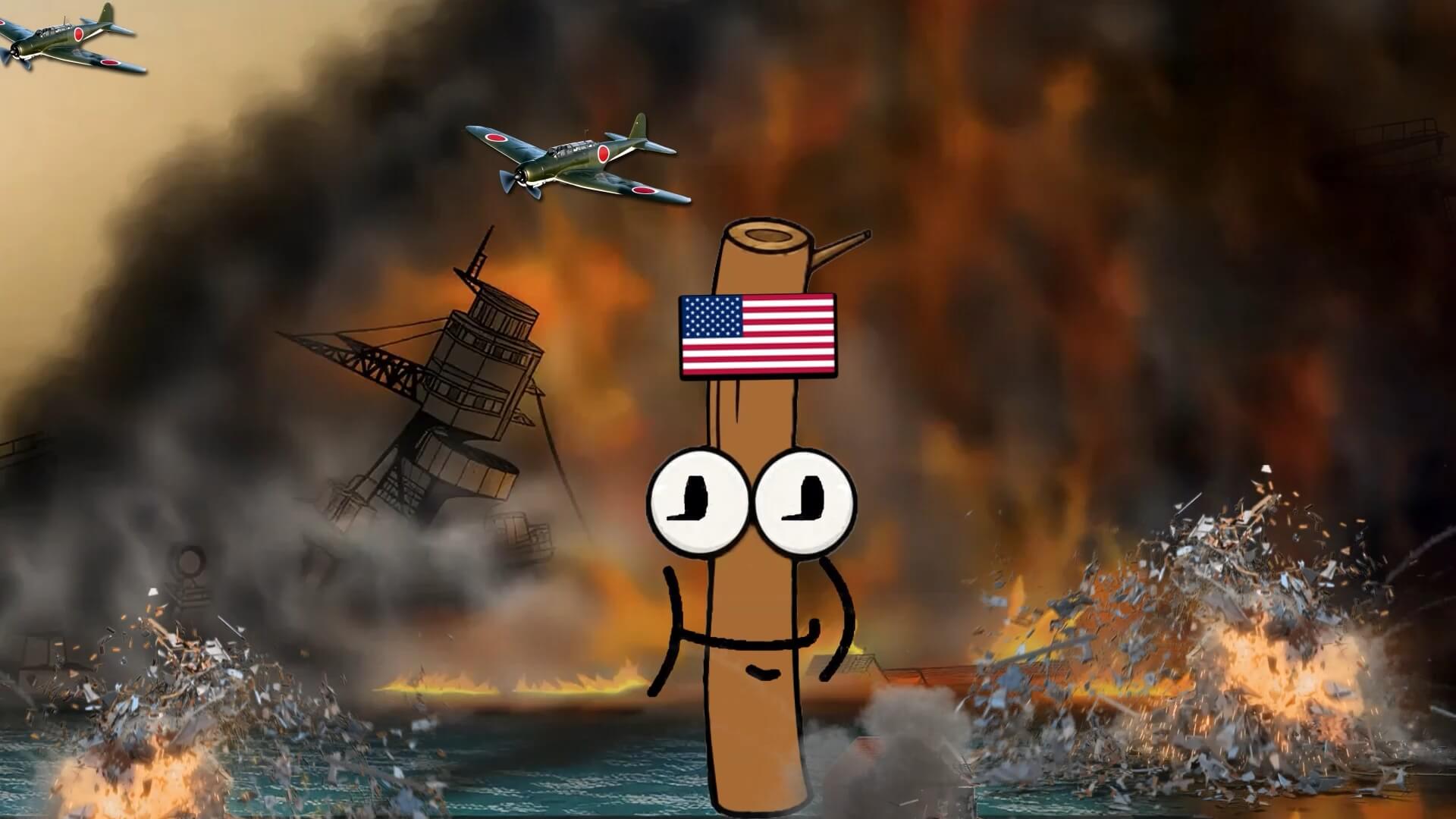
On December 7, 1941, a surprise Japanese attack on Pearl Harbor in Hawaii changed the course of World War II. The Japanese military launched a massive air raid against the United States Pacific Fleet, turning a quiet Sunday morning into one of the most important moments in modern history.
Why Did Japan Attack Pearl Harbor?
Before the attack, Japan and the United States had been negotiating for months over Japan’s military expansion in Asia and the Pacific.
The United States had imposed economic sanctions on Japan and opposed its continued expansion into China and French Indochina. Japan, meanwhile, wanted access to vital resources in Southeast Asia and hoped to prevent the American Pacific Fleet from interfering with its plans.
Japanese military leaders therefore decided to strike Pearl Harbor in an attempt to weaken the American fleet before expanding further across the Pacific.
The Attack Begins
Early on the morning of December 7, Japanese aircraft launched from six aircraft carriers approached Hawaii.
At 7:48 a.m. Hawaiian time, the first wave began its attack.
More than 350 Japanese aircraft took part in the raid. Fighters, bombers, and torpedo planes attacked American ships and military airfields around Pearl Harbor.
Explosions quickly filled the harbor.
Several battleships were hit, aircraft were destroyed on the ground, and smoke covered the sky as American forces desperately tried to respond.
A second wave of Japanese aircraft soon followed.
The Human Cost
The attack caused enormous destruction.
2,403 Americans were killed and 1,178 were wounded. More than 180 American aircraft were destroyed.
All eight American battleships present at Pearl Harbor were damaged, while four were sunk.
The USS Arizona suffered one of the most devastating attacks. A massive explosion destroyed the battleship and killed more than 1,000 crew members.
Japanese losses were much smaller, with 29 aircraft, five midget submarines, and 130 personnel lost.
What Japan Did Not Destroy
Despite the destruction, the attack did not completely cripple the American Pacific Fleet.
Three U.S. aircraft carriers assigned to Pearl Harbor were away from the harbor when the attack happened.
Japan also did not destroy several important facilities, including major fuel storage and naval repair facilities.
These surviving resources would later become extremely important to the American war effort in the Pacific.
America Enters World War II
The attack immediately changed America’s role in the war.
On December 8, 1941, the United States declared war on Japan.
President Franklin D. Roosevelt famously described December 7 as “a date which will live in infamy.”
A few days later, Germany and Italy declared war on the United States, and America responded by declaring war on both nations.
The attack on Pearl Harbor had transformed the war.
The United States was now fully committed to World War II.
Why Pearl Harbor Matters in History
The attack on Pearl Harbor remains one of the most significant events of World War II. It marked the moment when the United States entered the conflict directly and helped transform the war into an even larger global struggle.
From the quiet waters of Hawaii to battlefields across the Pacific and Europe, the consequences of that December morning would be felt for years.
Pearl Harbor was more than a military attack. It was a turning point that changed the course of world history.